

Most healthcare organizations invest significant time and resources into structuring lease transactions correctly. Every lease is carefully negotiated to balance financial objectives, operational needs, and regulatory requirements. But once the lease is signed, attention often shifts elsewhere.
That is where risk begins.
A well-negotiated lease delivers value only if its terms are consistently implemented and managed throughout the life of the agreement. Rent escalations must be tracked, financial obligations must be monitored, critical dates must be managed, and compliance requirements must be maintained. Without a disciplined approach, even well-structured leases can become a source of unnecessary financial loss, operational inefficiency, and regulatory risk.
Lease administration is more than an operational responsibility. It is one of the most important control points for protecting financial performance, maintaining compliance, and providing visibility across a healthcare real estate portfolio. When supported by standardized processes, centralized technology, and clear accountability, lease administration provides healthcare leaders with the information they need to make confident, strategic real estate decisions.
The Risk Doesn't End at Lease Execution
Lease execution is often treated as the finish line. It is the starting point. Healthcare leases typically span multiple years and require ongoing oversight, accurate implementation, and consistent administration. Even well-structured leases can create risk if they are not administered correctly.
Financial LeakageFinancial leakage from inaccurate billing or missed escalations |
Portfolio VisibilityLack of visibility into lease obligations and performance |
Operational ControlInconsistent processes across departments |
Compliance RiskIncreased exposure to regulatory and compliance risk |
Key Takeaway
These issues rarely occur in isolation. Over time, they compound. Reduced visibility increases compliance risk and limits financial performance.
Where Lease Administration Breaks Down
In many health systems, lease administration responsibilities are distributed across multiple teams.
Without a structured approach, this can lead to:
Gaps in Accountability
Unclear ownership can leave important lease requirements without consistent oversight.
Inconsistent Processes
Different departments may follow different workflows, standards, and approval procedures.
Limited Data Visibility
Fragmented systems make it difficult to understand obligations and performance across the portfolio.
Missed Financial Opportunities
Billing errors, missed escalations, and overpayments can go unidentified over time.
Over time, these gaps can compound, impacting both financial performance and compliance.
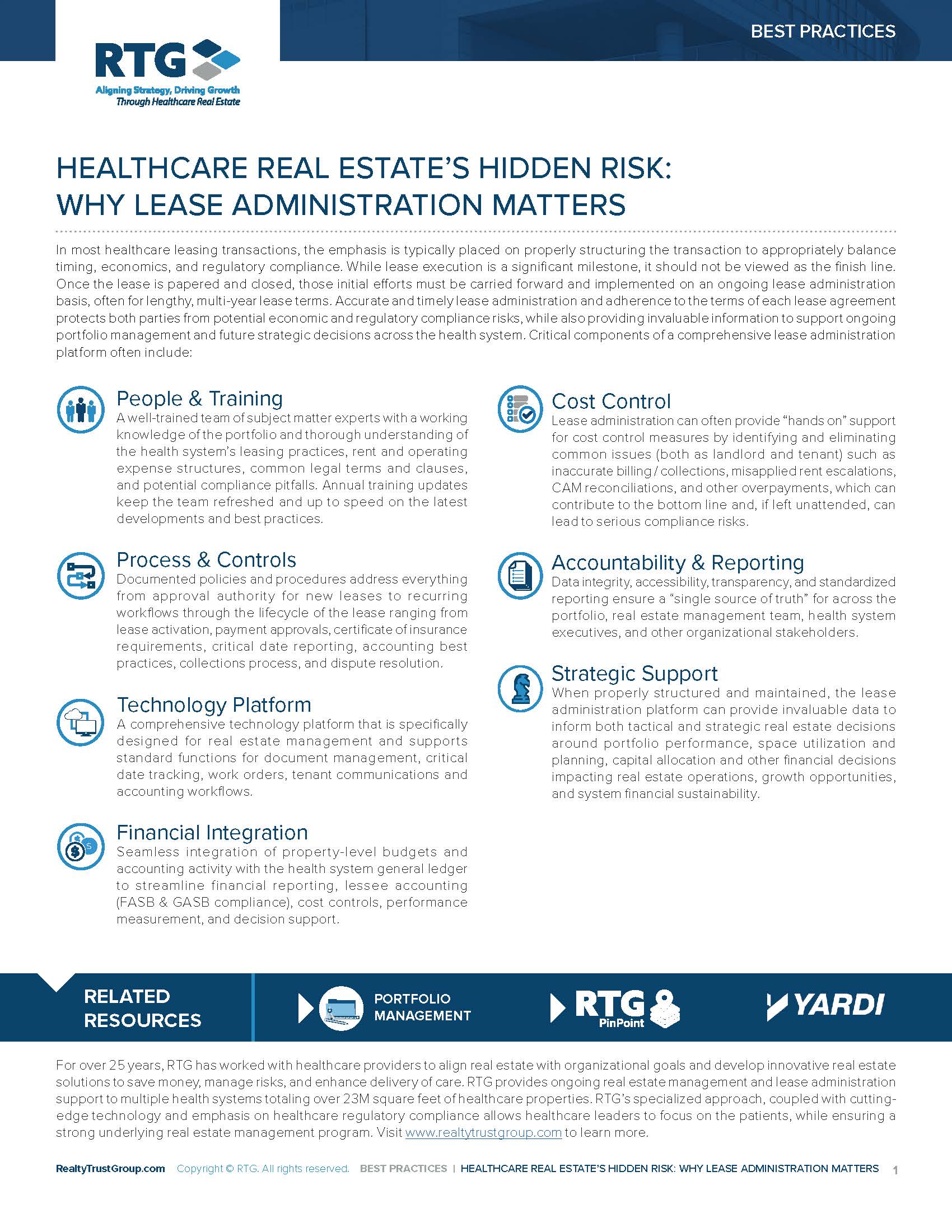
What a Strong Lease Administration Platform Includes
Effective lease administration is not a single function.
It is a coordinated platform that supports both operations and strategy.
People and Training
A knowledgeable team with a clear understanding of lease structures, financial terms, and compliance requirements.
Process and Controls
Standardized policies and procedures that guide lease execution, administration, and ongoing management.
Technology Platform
Centralized systems for document management, critical date tracking, and financial workflows.
Financial Integration
Alignment with the general ledger to support accurate reporting, cost control, and decision making.
Cost Control
Identification and correction of issues such as billing errors, missed escalations, and overpayments.
Accountability and Reporting
Consistent, transparent reporting provides a single source of truth across the portfolio.
Strategic Support
Data and insights that inform portfolio performance, space utilization, and capital planning decisions.
Why This Matters for Healthcare Leadership
For CFOs, General Counsel, Vice Presidents of Real Estate, Real Estate Directors, and other healthcare leaders, lease administration is a leadership issue, not a back-office task.
Without a structured approach, organizations are often making decisions without reliable data and exposing themselves to unnecessary financial and compliance risk.
Financial Performance
Greater accuracy, cost control, and protection against financial leakage.
Portfolio Visibility
Reliable information about lease obligations and performance across the organization.
Risk Management
More consistent oversight of financial, operational, and compliance requirements.
Strategic Decision Making
Better data to support planning, investment, utilization, and portfolio strategy.
The Bottom Line
Healthcare real estate risk does not begin with the lease; it develops over time through how leases are managed. Organizations that invest in structured lease administration gain:
Greater financial control
Improved visibility
Reduced compliance exposure
Stronger portfolio performance
Common Questions About Lease Administration in Healthcare Real Estate
Lease administration plays a critical role in protecting financial performance, maintaining compliance, and improving visibility across a healthcare real estate portfolio. The answers below address common questions about how lease administration works, where risk can emerge, and why a structured approach matters.
What is lease administration in healthcare real estate?
Lease administration is the ongoing process of managing lease agreements, including rent collection, escalations, compliance tracking, and reporting. It ensures that lease terms are implemented accurately over time.
Why is lease administration important for health systems?
Healthcare leases are long-term and complex and often represent significant investment across the portfolio. Without proper administration, organizations risk financial leakage, operational inefficiencies, and compliance exposure.
What are the most common lease administration issues?
Common issues include:
- Missed rent escalations
- Inconsistent billing or collections
- Poor documentation
- Lack of centralized tracking
- Expansion beyond lease terms
How does lease administration impact financial performance?
Accurate lease administration helps identify and correct billing errors, enforce lease terms, and reduce unnecessary costs, directly impacting the bottom line.
How does lease administration impact compliance?
Improper administration can lead to violations of lease terms and regulatory requirements, particularly in arrangements involving referring physicians.
What systems support effective lease administration?
Organizations benefit from centralized technology platforms that track lease data, automate workflows, and integrate with financial systems.
Why is this a leadership issue?
Lease administration affects financial reporting, risk exposure, and strategic decision making. Leadership oversight is critical to ensure consistency, accountability, and alignment across the organization.
Continue the Conversation
See How Structured Lease Administration Reduces Risk
Discover how structured lease administration protects value and reduces risk.


